

The Cartier Panther and Its Spirited Creators
The Cartier Panther and Its Spirited Creators

The panther has long been synonymous with Cartier, and it is so deeply intertwined with the maison’s identity that it would be difficult to imagine a reality where their fates had not overlapped. Lending its indomitable spirit and unique beauty to the creations that bear its name, the panther has made countless appearances throughout the history of Cartier, and yet every time it steps into the spotlight, this fabulous feline never fails to inspire awe.
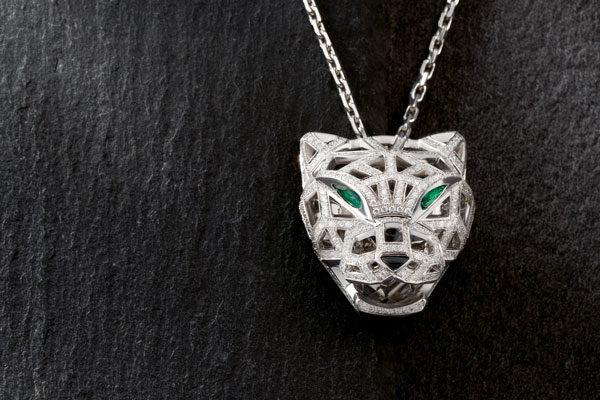
Over and over again, the maison manages to find new and refreshing ways to create with the panther. How does it do that? Whether seen in its entirety or partially concealed, whether depicted with a naturalistic or abstract approach, the panther’s powerful allure remains ever intact. Its eyes appear to pierce straight through yours, its musculature always anatomically accurate, its coat gleaming against the light, and even its tail, whenever you can see it, always succeeds in revealing the big cat’s mood. Indeed, every Cartier Panthère creation expresses a unique emotion which is proof positive, showing how deeply familiar the maison is with the animal.
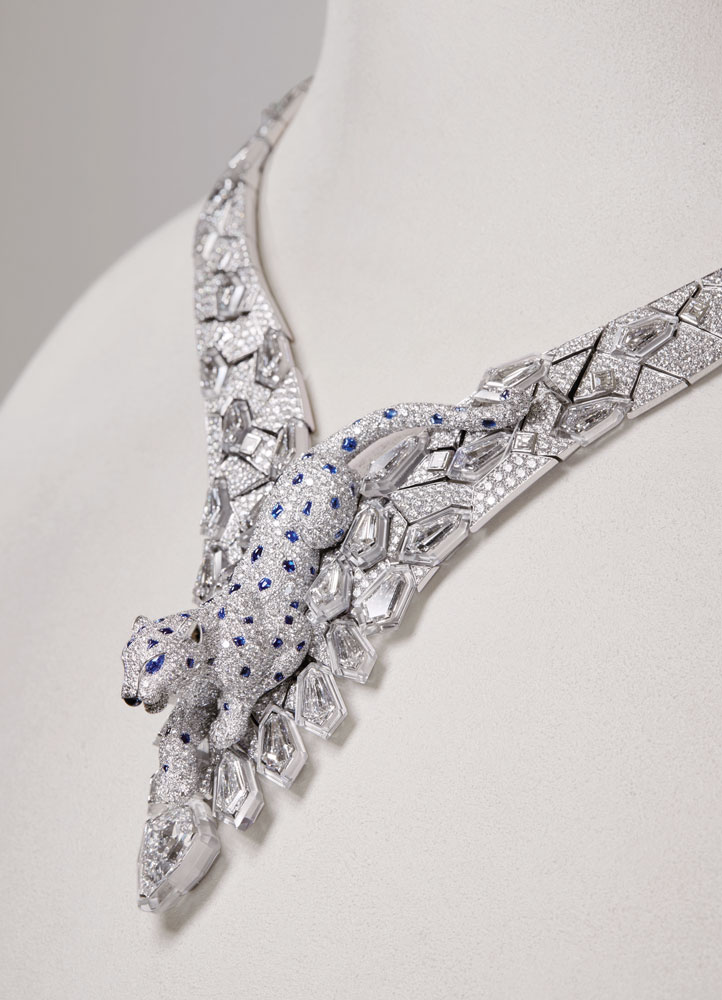
Panthère des Glaces necklace – Cartier High Jewelry 2024 Nature Sauvage
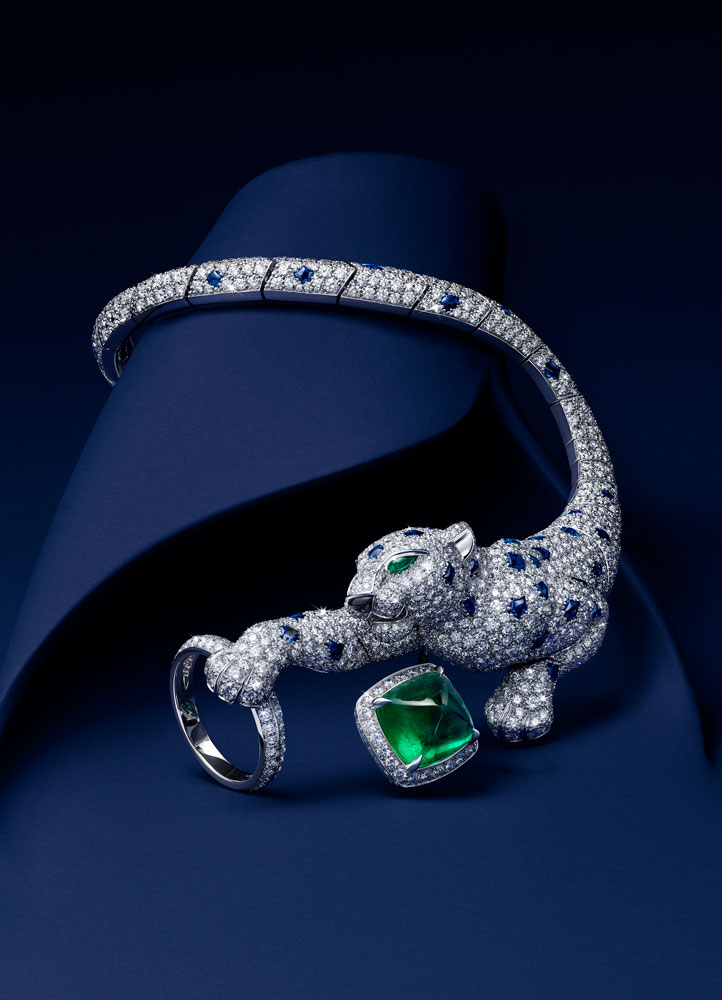
Panthère Jaillissante bracelet-ring – Cartier High Jewelry 2024 Nature Sauvage
This ability to capture the panther in all its splendorous forms comes from three important elements. One, an unassailable jewelry crafting know-how. Two, true love and respect for the beauty of nature, and three, a fearless approach to design. These are the foundational values of Panthère de Cartier as established by some of the most gifted designers in the maison’s history, from Louis Cartier and Charles Jacqueau to Jeanne Toussaint and Pierre Lemarchand.
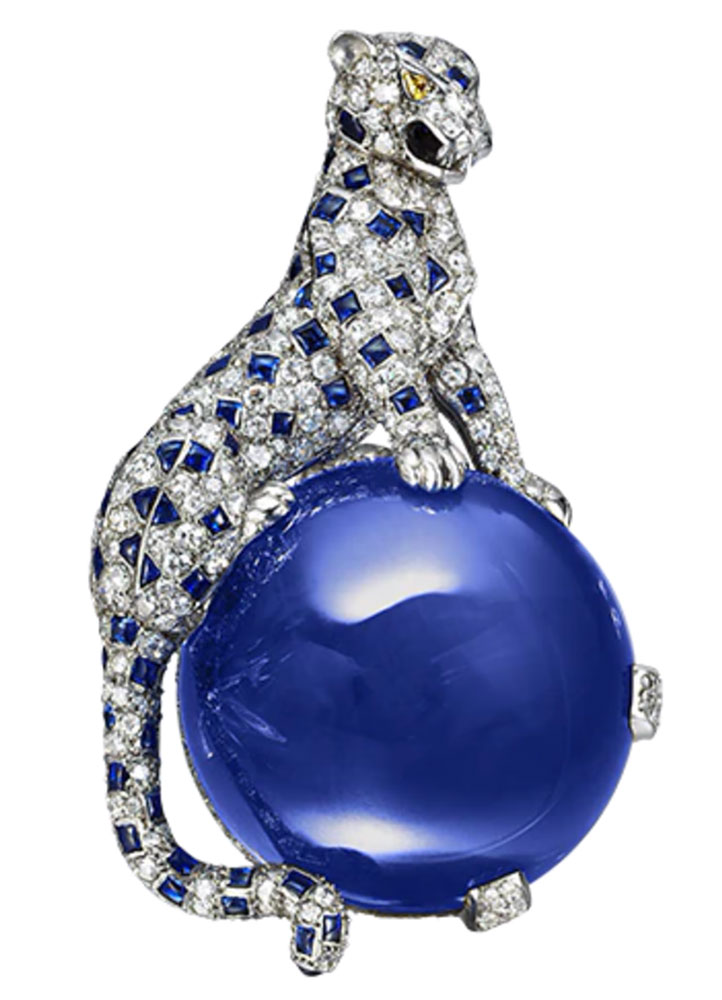
Brooch featuring three-dimensional panther atop a 152.35-carat sapphire, commissioned by the Duchess of Windsor in 1949
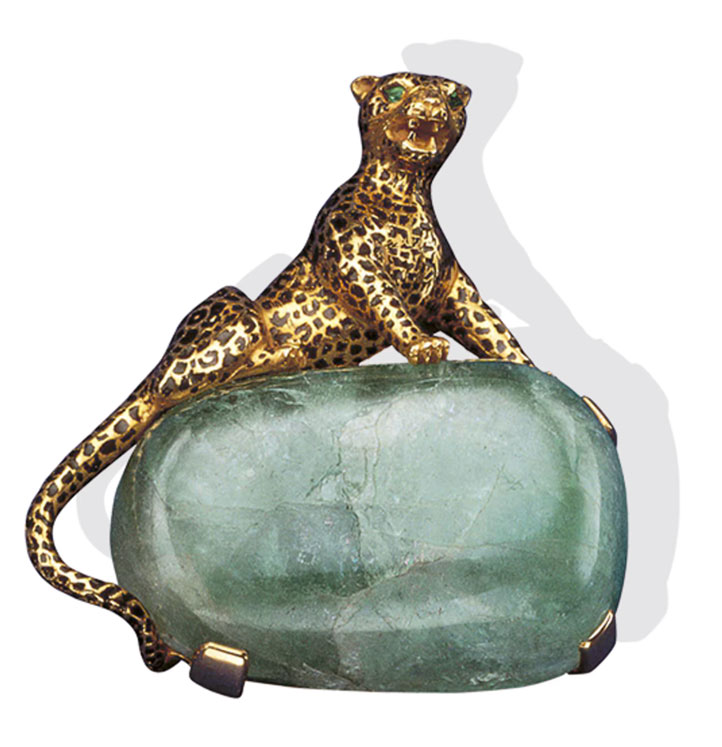
Panther brooch, in yellow gold, emeralds, and black enamel created for the Duchess of Windsor in 1948
Jeanne Toussaint
As Louis Cartier was the creator of numerous Cartier icons such as the Tank, Santos and Trinity, you’d think that the Cartier Panther was also associated with the debonair Cartier brother; however, that was not truly the case. While Louis Cartier did play a part introducing panther-inspired objects to Cartier’s design vernacular, it was the legendary Jeanne Toussaint, Cartier’s first female artistic director, who famously made panthers the unofficial symbol of the maison, expressing through precious materials the animal’s fluid movements, intense gaze and sleek silhouette.
The Belgian-French designer had an exceptional flair for style and was always ahead of the curve, knowing what would appeal to the social elites even before they knew it themselves. She was obsessed with panthers after seeing the big cats in the African wild, and continued to be enthralled by them long after the trip was but a memory.
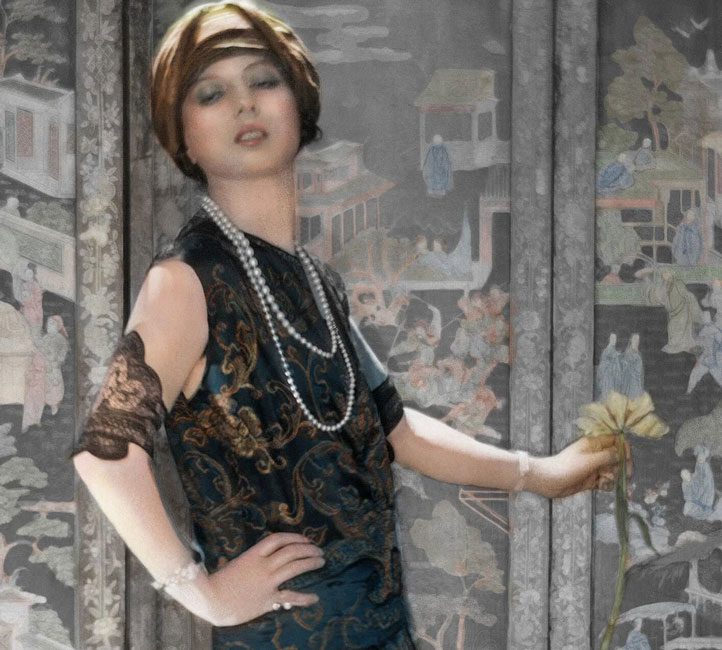
La Panthère herself, Jeanne Toussaint
In the early 1940s, she boldly steered the Cartier jewelry catalog away from the ubiquitous Art Deco style and towards sculptural, three-dimensional forms which took her panther designs to the next level. This was a big step from all the panther creations created up until that point, the very first pieces being a jewelry wristwatch from 1914 and an exquisite chatelaine watch from 1915. Both of these were designed with a panther-inspired pattern made of onyx and pavé diamonds. Indeed, the first Cartier object to feature the panther in its entirety was not a jewelry piece, but an invitation card designed by the famous French illustrator George Barbier, featuring a dashing black panther and a woman dressed in a stylish Poiret gown with ropes of pearls draped all around.
From that point, Cartier moved towards more expressive panther designs. In 1917, Louis Cartier had the workshop produce a cigarette case in diamonds, onyx and platinum featuring a panther striding amongst cypress trees. A gift to Toussaint, whom he affectionally called his “Petite Panthère,” it was also the first figurative reproduction of a panther in the Cartier archives, opening the door to many more in the decades ahead.
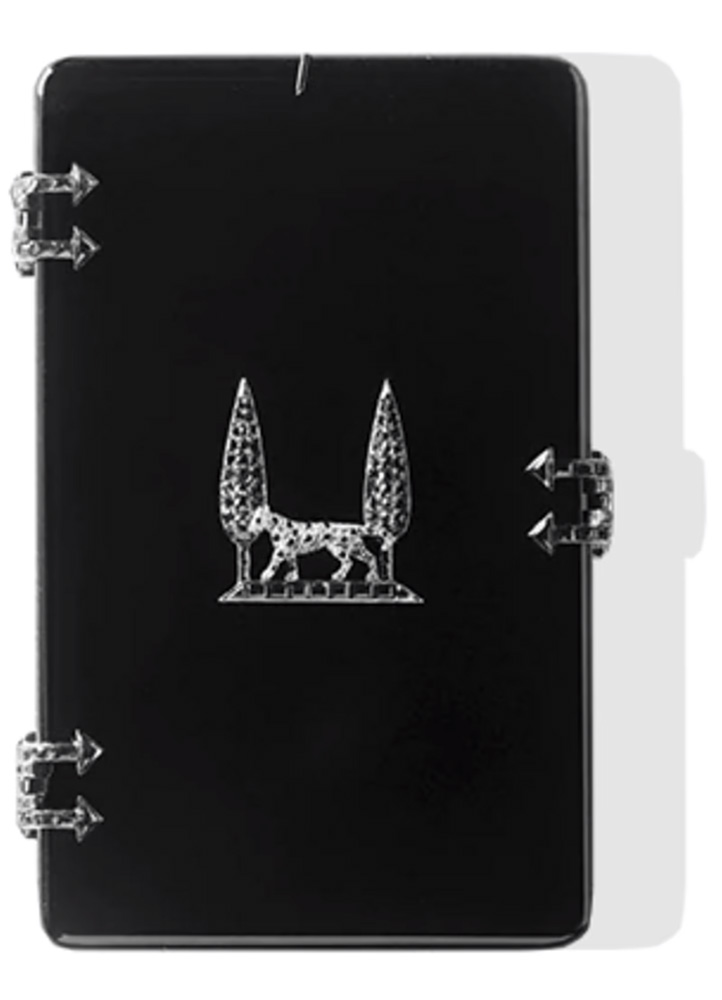
Cigarette case in diamonds, onyx and platinum, offered to Jeanne Toussaint by Louis Cartier
Charles Jacqueau
At that time, Toussaint was not yet placed in charge of the maison’s jewelry category. That was the department of Charles Jacqueau, Cartier’s head designer who was personally hired by Louis Cartier through a chance encounter. According to Francesca Cartier-Brickell in her book The Cartiers, Louis Cartier was strolling down a street in Paris when his eye was caught by a beautiful balcony being installed. Drawn to its avant-garde design and excellent proportions, he asked to meet the creator of this exquisite piece of work, and was thus introduced to Jacqueau.
Even though Jacqueau’s medium was large metal structures rather than intricate gold and gemstones, Louis Cartier knew an innovator when he saw one. It was a few months before Jacqueau finally bit the bullet, walked into 13 Rue de la Paix, and the rest is history as we all know.
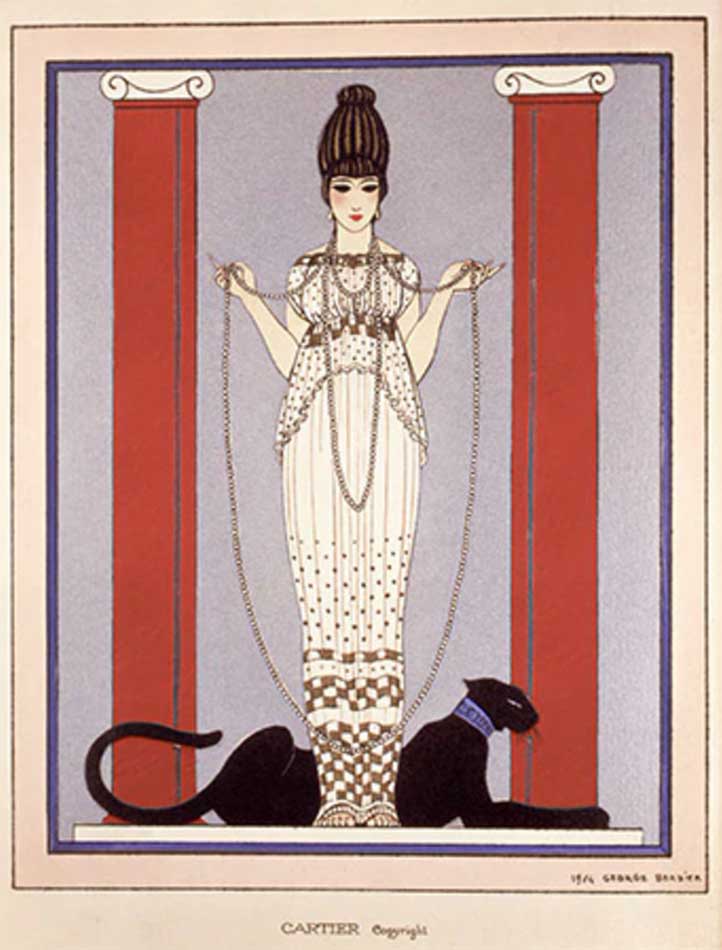
Invitation card designed by the famous French illustrator George Barbier for Cartier
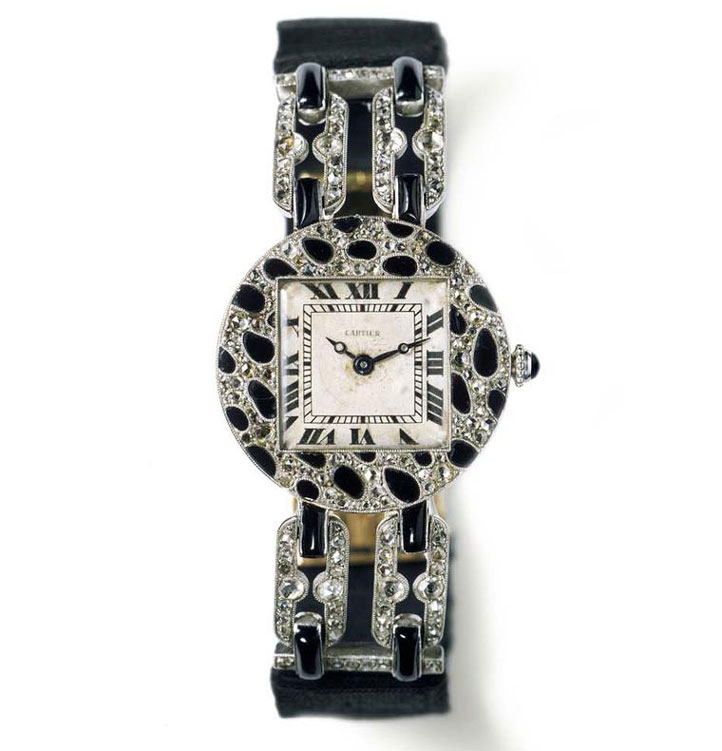
A 1914 ladies wristwatch featuring panther spots in black onyx on diamonds and white gold
Before Toussaint popularized the Cartier panther, Jacqueau was already experimenting with panther motifs. Indeed, his was the creative mind behind all the aforementioned panther-inspired pieces, including the cigarette case gifted by Louis Cartier to Toussaint. Jacqueau has been dubbed the “Picasso of jewelry design” for his fine, detailed and original pieces, and his approach to style and color was also known to be “astonishing.” Collaboratively, Louis Cartier and Jacqueau had crafted numerous panther-themed small accessories such as jabot and tie pins.
Throughout the 1920s and ’30s, the panther began to evolve and appear in three-dimensional forms, accelerating sharply after Toussaint was appointed director of high jewelry in 1933. Even though she had no formal training as a designer, her inimitable flair for style and her bold approach to aesthetics contributed far more than any design certificate could. This earned her yet another nickname, La Panthère, for her authoritative presence and decisive leadership style. Toussaint’s fearless vision combined with Jacqueau’s wealth of knowledge, under the direction of Louis Cartier, further enriched the Cartier panther collection, leading the maison to create some of the most era-defining designs of all time.
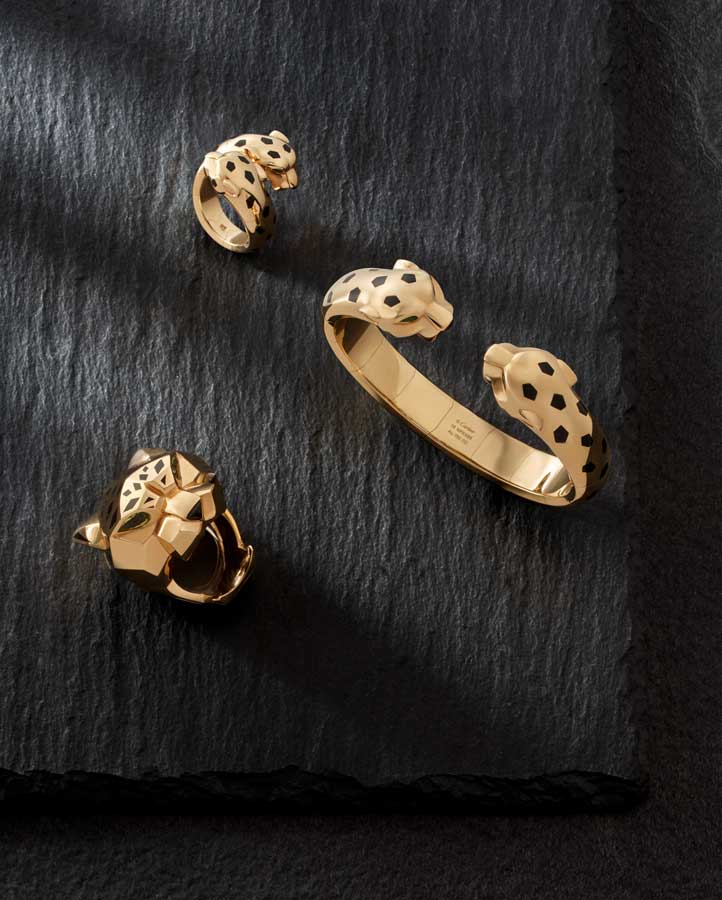
Contemporary Panthère de Cartier fine jewelry in yellow gold with black lacquer spots and tsavorite eyes
Pierre Lemarchand
In addition to Toussaint and Jacqueau, the Cartier design studio grew to include a number of illustrious names such as Edmond Forêt, Gérard Desouches, Frederick Mew and Pierre Lemarchand, who worked with both Cartier Paris and Cartier London. Especially trusted by Toussaint, Lemarchand was renowned for his animal designs and his incredibly realistic sketches. Having had the opportunity to travel to India with Cartier for a royal commission, he managed also to observe panthers in their natural environment, and as Jacqueau had done, filled his sketchbooks with images of panthers for future reference. Together with Mew, Lemarchand continued to create animal designs and panther jewelry throughout their respective careers with Cartier, working closely with Jean-Jacques Cartier, who was the son of Jacques Cartier.
For almost as long as Cartier has been designing jewelry, the maison has been studying the panther and always through the eyes of its many gifted creatives. Cartier Panther creations, in particular the high jewelry pieces, are as detailed as can be, often featuring grooved gold lines around the eyes or flanks evoking fine fur of the panther’s coat, or articulated paws or tails that animate the panther ever so elegantly. The visionary perspective of Louis Cartier, the impeccable taste of Jeanne Toussaint, the immense craftsmanship of Charles Jacqueau and the prodigious talent of Pierre Lemarchand, all have been distilled into the contemporary creations, driving ever more imaginative designs in the future.
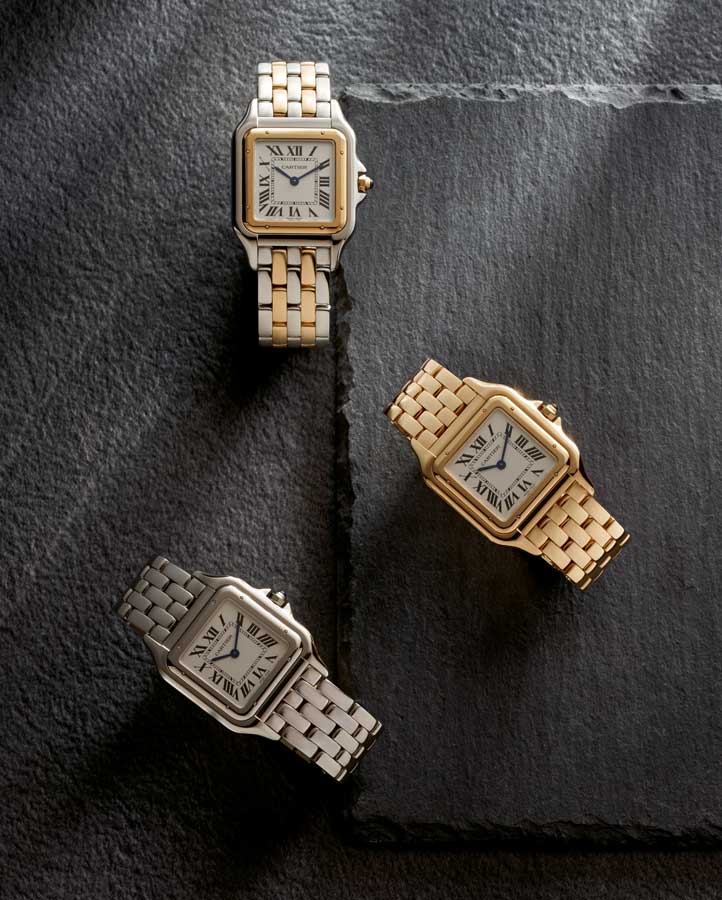
The new Panthère de Cartier timepiece, large model, introduced in 2024
Cartier

You may also like

Editorial
Fore Of The Greatest Golf Watches Ever To Hit The Green, Inspired By Happy Gilmore 2
Aug 15, 2025
Editorial
Fore Of The Greatest Golf Watches Ever To Hit The Green, Inspired By Happy Gilmore 2
Aug 15, 2025
News
These Are The Most Iconic Singapore-Exclusive Timepieces Over The Years, And Then Some
Aug 8, 2025
News
These Are The Most Iconic Singapore-Exclusive Timepieces Over The Years, And Then Some
Aug 8, 2025
Editorial
How The Cartier Santos Became The First Pilot’s Watch
Aug 4, 2025
Editorial
How The Cartier Santos Became The First Pilot’s Watch
Aug 4, 2025