


The 2025 F1 Season Is Here: A Retrospective On The Partnership Between TAG Heuer And Formula One
The 2025 F1 Season Is Here: A Retrospective On The Partnership Between TAG Heuer And Formula One

2025 marks the 75th anniversary of Formula One, with TAG Heuer back in the driving seat as Official Timekeeper. For many, this welcome return embraces a shared and symbiotic emphasis on innovation and cutting-edge technology. Granted, it is not TAG Heuer’s first time as the official Formula One timekeeper. From 1992 to 2003, the Swiss brand saw over 175 Grand Prix events without a single contested time. The brand’s precision timing expertise aligns perfectly with a series where milliseconds can determine victory, with decades of motorsport involvement under its belt.
TAG Heuer’s close relationship with F1 underlines its reputation as a leader in high-performance timekeeping, and the common goals and ethos make for a natural fit. At the announcement on the 6th of January, Antoine Pin, CEO of TAG Heuer, said: “In a sport defined by mental resilience, physical strength, strategy, innovation, and performance, it is only natural for TAG Heuer to be at the very heart of Formula One as Official Timekeeper. With decades of history in F1 connecting us to the most successful drivers and teams of all time, we are honoured and privileged to be the name connected to the very thing that defines the winner: time. As Formula One and their exceptional team continue to build on the amazing work done to create one of the greatest properties in sport, we are excited to be part of the journey and create new stories to enrich TAG Heuer.”
View this post on Instagram
To speak frankly, many watch fans and racing Tifosi have missed this natural brand connection. Don’t get us wrong — we’re not knocking the formidable job Rolex has done during its period of stewardship. However, a tangible smell of racing fuel permeates the back catalogue of TAG Heuer. Likewise, the evocative nature of motor racing emphasises a relentless pursuit of cutting-edge tech that echoes their watchmaking focus. Innovation is key at the La Chaux-de-Fonds headquarters, which Jack Heuer transformed through a rich history of models like the Carrera and Monaco. And racing is in the brand’s blood. The story of TAG Heuer follows the world’s four-wheeled evolution, and much has been written about this close relationship. However, a renewed celebration is called for as vows are renewed between Antoine Pin’s TAG Heuer and Formula One.
TAG Heuer’s rich history of racing milestones
We won’t be overstating any facts if we claim Jack Heuer as the instigator and guiding force behind today’s intertwined relationship between motorsport and wristwatches. Jack, having recently graduated from the Federal Institute of Technology in Zurich, joined the family business started in 1860 in St.Imier by Eduoard Heuer as Heuer Uhrenmanufaktur AG. But what inspired the young entrepreneur was participating in a 1958 rally in Switzerland. At the young age of 26, Jack was enjoying his role in the family’s legacy watch business, but also flirting with other career paths, and entered a road rally as a navigator. Ironically, the car’s driver was also named Heuer (but not of the same family), and the car ended up in third place on the podium. Too bad — the car could have won, if not for a timing error caused by the Heuer dashboard timer. This sparked a lifelong passion for stopwatch technology, chronographs and accurate timekeeping, culminating in good use of his business and marketing skills in understanding the value of connecting with motorsport and its drivers.

Jack Heuer
From Jo Siffert being the first driver to be given a Carrera Chronograph in a shrewd product placement move, it led to TAG Heuer being the first watch brand to sponsor a Formula One team. Jack joined forces with Ferrari as early as 1971 before embarking on a 30-year partnership with McLaren from 1985 until 2015. But the McLaren deal included a lot more for both parties. The TAG Group, Techniques d’Avant Garde, was a holding group with a deep tech focus, and it partnered with McLaren to found McLaren-TAG. Under this umbrella, TAG funded the development of McLaren’s turbocharged engines, designed by Porsche and branded as TAG-Porsche engines. No other watch manufacturer can lay claim to an embrace as lovingly close as this, and the partnership was highly successful. McLaren went on to secure three consecutive Constructors’ Championships (1984–1986) and multiple Drivers’ Championships with drivers like Niki Lauda (1984) and Alain Prost (1985, 1986).
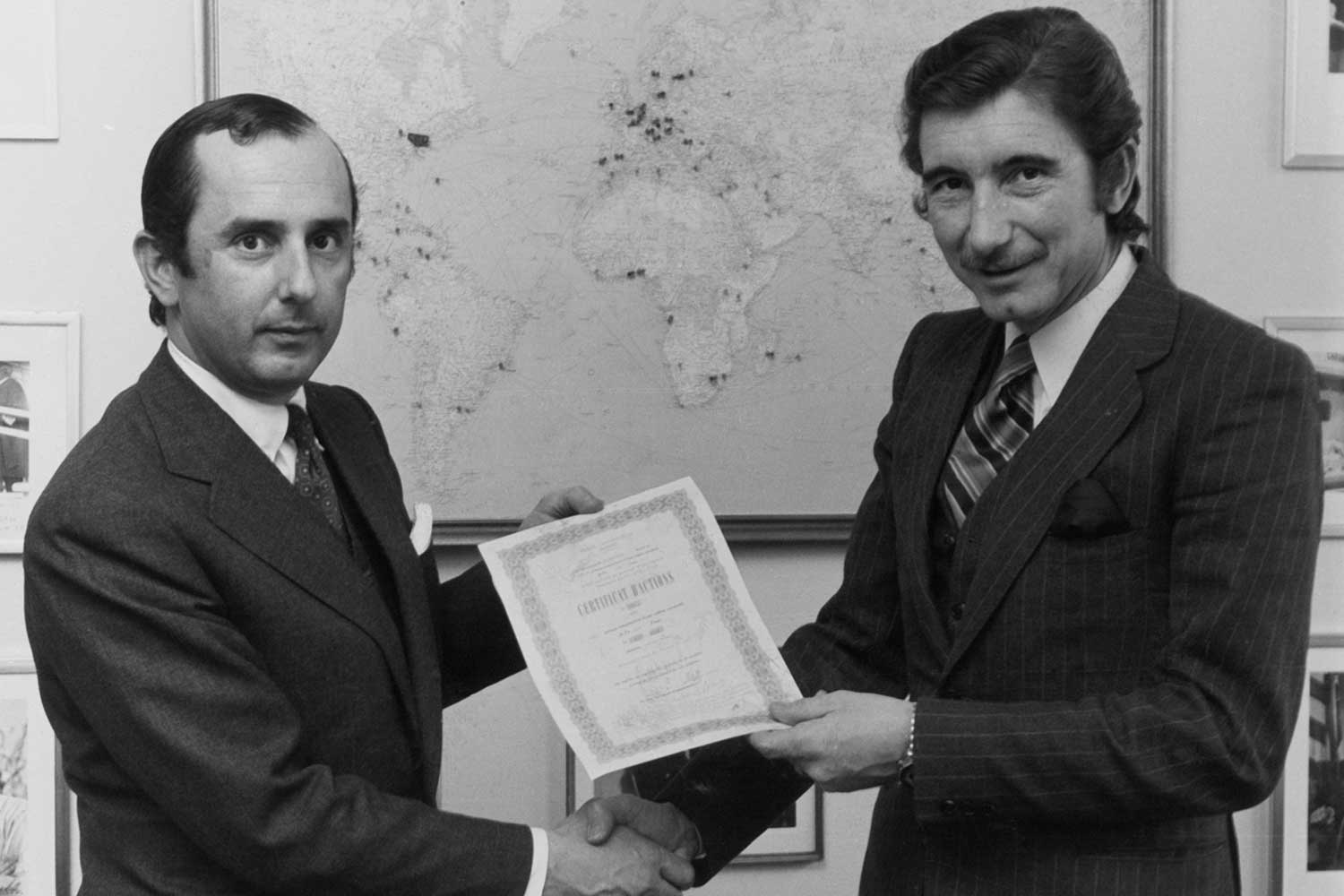
Jack Heuer (left) with Jo Siffert. Siffert was one of the first Formula 1 drivers to be sponsored by a watch company when Heuer signed a partnership deal with him in 1968

Heuer joins TAG (Techniques d’Avant-Grant); TAG Heuer the brand becomes McLaren’s racing team sponsor

Niki Lauda (left) and Alain Prost (right) at the Grand Prix of Portugal, Estoril, 21 October 1984. (Photo by Paul-Henri Cahier/Getty Images)
In recent years, we have mostly associated TAG Heuer with the tech-forward Oracle Red Bull Racing team, which has spawned plenty of special editions, many focused on the successful Carrera Chronograph ranges. At the same time, TAG Heuer was in partnership with automotive brand, Aston Martin, from 2018 to 2020. This resulted in the Aston Martin Special Edition watch, featuring Aston Martin’s iconic green color and F1 design elements. Currently, TAG Heuer is in an official partnership with Porsche.
-

- Aston Martin Vantage GTE
-

- TAG Heuer created for Aston Martin a 43mm quartz-driven chronograph in the Formula 1 collection

TAG Heuer and Oracle Red Bull Racing

TAG Heuer Formula 1 Chronograph × Oracle Red Bull Racing in 44mm titanium. © Image: Revolution
Let’s look closer at the three collections that have been the driving (pardon the pun) force of the brand and the surprising return of some iconic collections.
The Carrera Chronograph: The one that started it all
Most of the TAG Heuer catalogue has deep links to an era, a circuit or a motor-racing legend. But some have remained closer to the action and our hearts, starting with the Carrera chronographs. Ironically, the Carrera is named after the Carrera Panamericana, not a tarmac-covered F1 circuit, but a gruelling road rally. It was later revived with vintage cars as a classic event but originally pitted factory teams and privateers against each other in a death-defying race through the unforgiving roads of rural Mexico.
Chronographs have always characterised the Carrera collection, offering clean, legible dials, a casual aesthetic, and motorsport-inspired details. The range has evolved from manual-wind Valjoux movements to in-house automatic calibers and quartz innovations while embracing the best of new technology on the way. The original Carrera was the 1963 ref.2447, designed by Jack Heuer, and strapping one onto the wrist of race driver Jo Siffert marked the beginning of Heuer’s intimate racing bond. In a world where we see inflation in the use of superlatives, the ref.2447 is a Bonafide icon, and early models were fitted with manual movements like the Valjoux 72.
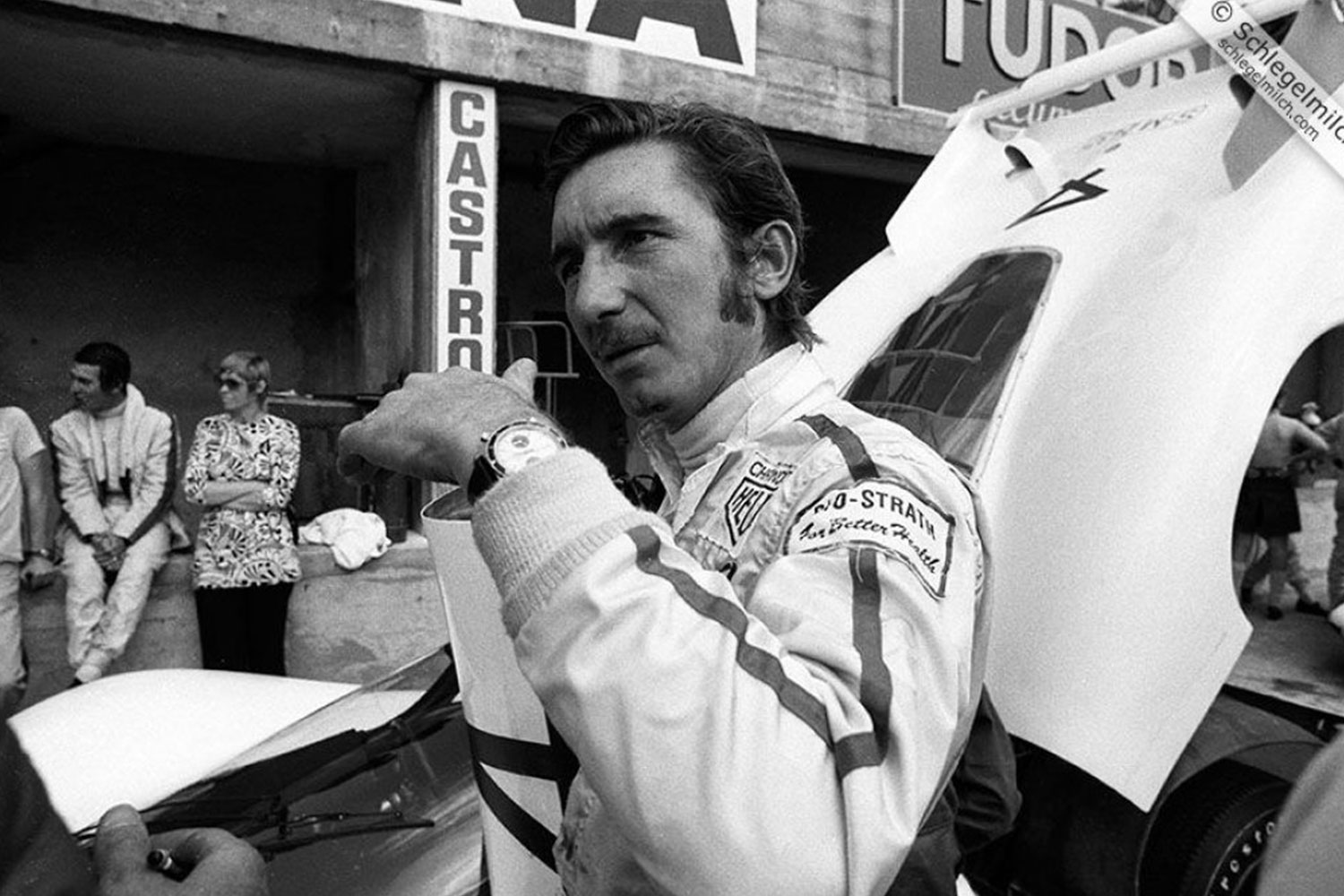
Jo Siffert aka TAG Heuer’s first brand ambassador. Image: On The Dash
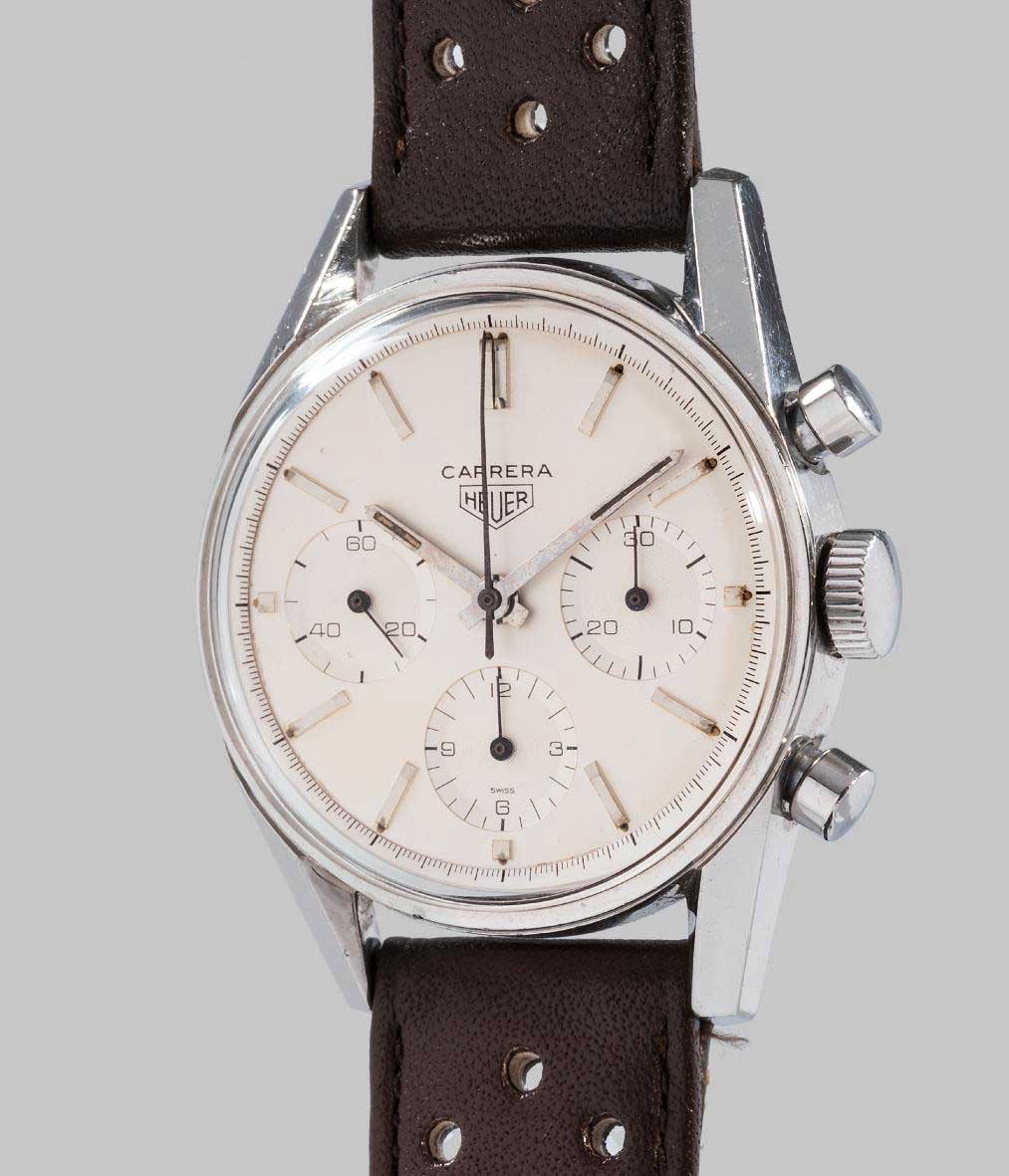
TAG Heuer Carrera ref. 2447, 1963. An early Heuer Carrera stainless steel chronograph wristwatch with two-tone cream dial (Image: Phillips)
Unlike models like the Camaro and Silverstone, which came and went, Carrera chronographs have remained the brand’s mainstay. They acquired battery-powered hearts during the difficult period of the Japanese-incited quartz crisis and evolved through the flamboyant designs of the late sixties and seventies. After the takeover by the TAG Group, the eighties saw a new heyday for the brand, including new and more organic designs like the SL-series worn by Brazilian legend Ayrton Senna and, finally, a return to mechanical movements.
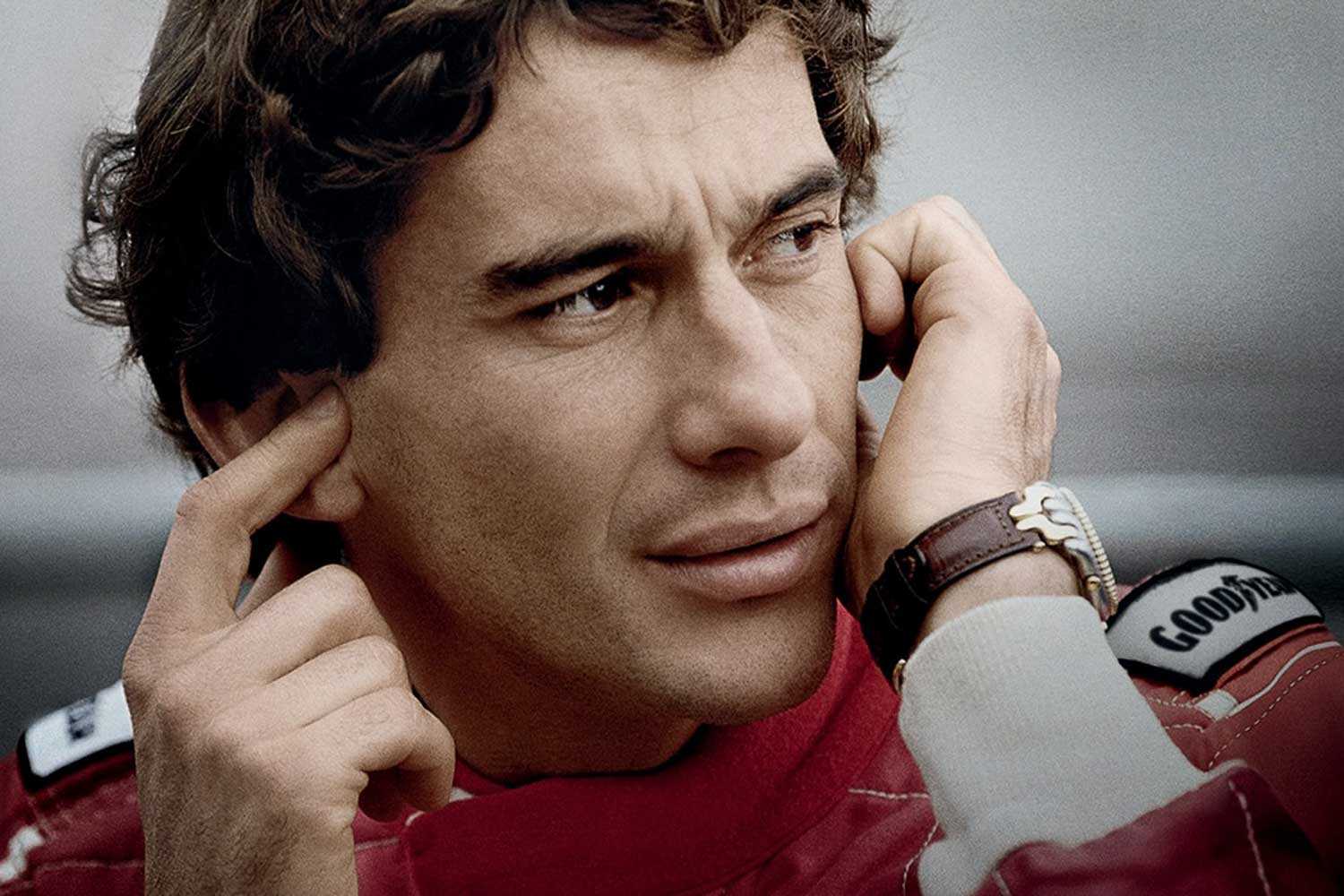
The youngest ever three-time world champion, racing legend, Ayrton Senna
With the resurgence of demand for smaller watch sizes, the range of tough 42mm to 44mm Carrera chronographs was complemented by a period-perfect 39mm case. With several iterations over the last few years, the ‘Glassbox’ design’s debut in 2023 has been the strongest move yet by TAG Heuer, reinventing the Carrera collection. Running parallel to a modern range including skeletonized, future-proofed references, the 39mm ‘Glassbox’ collection was offered in a new purple vision at LVMH Watch Week this year. With this latest colourway, the top-tier inclusion of a tourbillon encapsulates the strong balance of tradition and modernity that makes the entire Carrera collection so appealing.

The latest TAG Heuer Carrera “Glassbox” Chronograph made its debut at LVMH Watch Week 2025 with a purple smokey dial
The TAG Heuer Monaco: Not too square for the races
Ask a watch lover to name a square watch, and the TAG Heuer Monaco will likely be the first example to be mentioned. Despite its flamboyantly angular form and plans to have it replaced by the Silverstone, the Monaco has remained one of the most iconic timepieces in horological history. The square case with its rounded flanks and inset lugs screams seventies chic, and it was the first known square-cased, water-resistant chronograph. It must have looked like a spaceship at the time, breaking traditional watchmaking norms with its avant-garde aesthetics and gaining racing fame when Steve McQueen wore it in the 1971 film Le Mans.

TAG Heuer Monaco, 1969
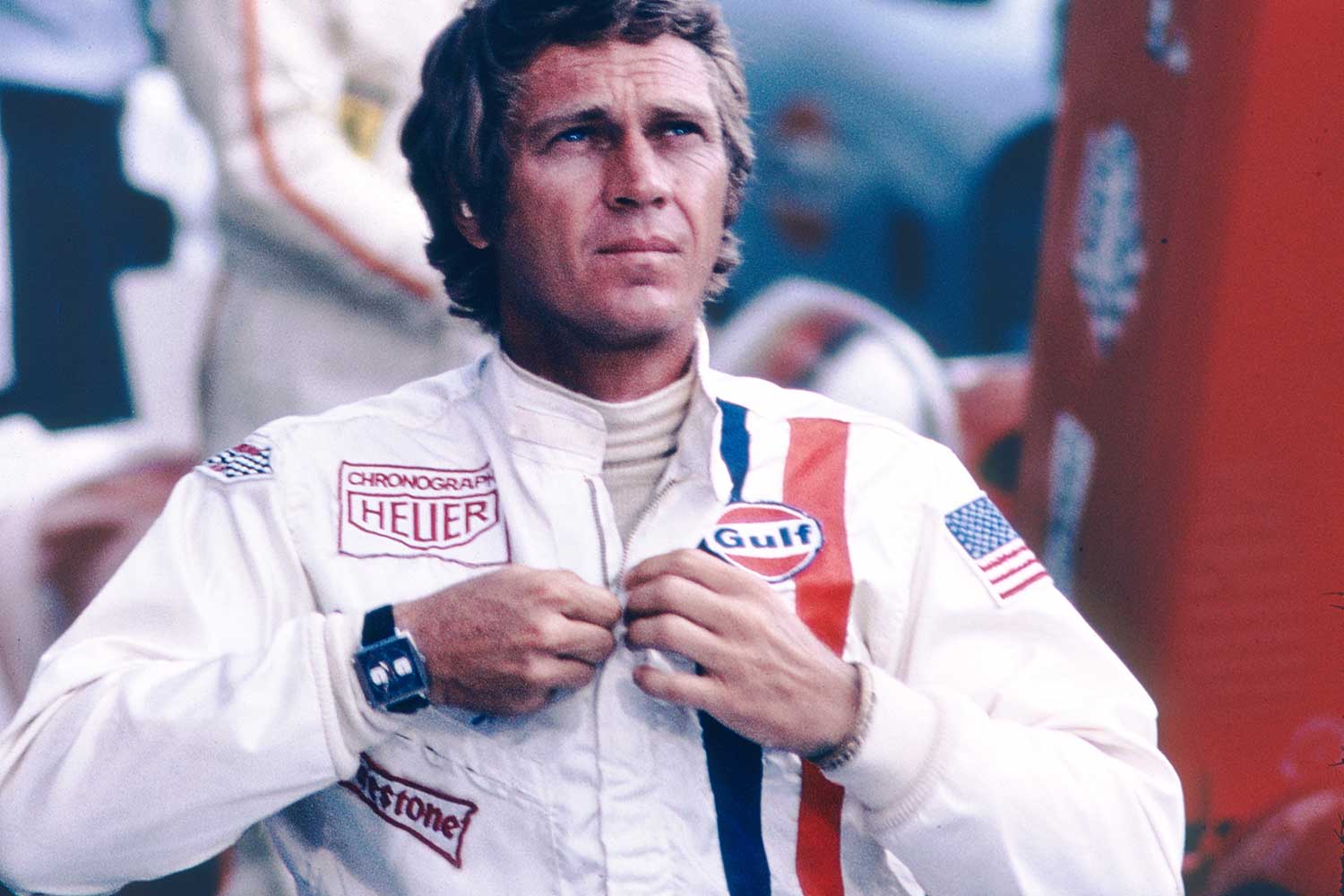
Steve McQueen on the set of Le Mans wearing the Heuer Monaco, that has now become synonymous with the film and his own name, even though the watch wasn’t a personal watch of his (Image: TAG Heuer)
The film and its posters cemented the Monaco’s association with motorsport, and over the decades, it has evolved while retaining its distinctive identity. TAG Heuer has released numerous iterations, incorporating advanced materials, movements, and designs. The 2000s brought limited editions and collaborations, such as the Monaco V4 with its belt-driven movement. For many of us, this was a pinnacle of TAG Heuer managing the strong juxtaposition of retro and avant-garde that the brand is known for. The evolution of the square, from fresh-faced, blue-eyed Calibre 11 to the red-hot breakout star that’s the Monaco Split-Seconds of last year, the Monaco has melded vintage inspiration with modern technology, offering improved precision, big power reserves, and scintillating colour. Today, the Monaco remains a square, unique cornerstone of TAG Heuer’s collection, celebrated by collectors and enthusiasts worldwide.

TAG Heuer Monaco V4
-

- TAG Heuer Monaco Chronograph Calibre 11 debut model from 1970
-

- TAG Heuer Monaco Split-Seconds Chronograph, whose caliber 6710 was created in partnership with Vaucher
The Formula 1 namesake
The TAG Heuer Formula 1, launched in 1986, marked the brand’s foray into the quartz watch market, putting the brand on the fast track to eighties-chic stardom. With the Formula 1, TAG Heuer took a leaf out of the Swatch book of success, and combined affordability with sports watches of tough and bright colours. Designed to appeal to motorsport enthusiasts as well as the fashion cognoscenti, it featured robust, water-resistant cases, bold colours and a design for a young, affluent demographic. Over the years, the Formula 1 collection evolved from its chic 34mm roots, incorporating new materials like titanium, boasting advanced quartz and automatic movements while maintaining its accessible, cheeky persona.

Vintage TAG Heuer Formula 1 collections
The Formula 1 line has seen numerous iterations, including chronographs, three-hand models, and limited editions tied to motorsport events and partnerships. But it has never strayed from its path of being relentlessly modern and casual. Its design has continuously adapted to trends, and in recent years, TAG Heuer has reintroduced vintage-inspired models, such as the Formula 1 Indy 500 and Calibre 16 editions, appealing to both new and nostalgic audiences.

TAG Heuer Formula 1 Chronograph x Indy 500
A standout event in the Formula 1 evolution was the runaway success of last year’s Kith collaboration, which saw the brand pushing the Rewind button on a virtual eighties ghetto blaster, right back to 1986 and 35mm sizes. Despite its premium price tag, this limited edition was designed in partnership with Ronnie Fieg of streetwear brand Kith, bringing it all back for eighties kids. With a range featuring composite case or full stainless steel cases, vibrant blue, yellow and green colours popped with a unique “Kith” logo on the dial, merging TAG Heuers’ heritage with 2024 streetwear culture. The Kith edition showcased TAG Heuer’s innovation while honouring its roots, further solidifying Formula 1’s versatile, iconic collection status.

Will the TAG Heuer Silverstone and Monza return?
I’m not wrong in saying this, but the Silverstone had a special place in many people’s hearts. Its rounded TV-like case epitomized the mid-seventies style when it was launched in 1974 as the ref.110.313, and was meant as a replacement for the square Monaco. History wanted the story to take a different path, but that doesn’t stop the lugless soft case of the Silverstone from standing out in a crowd of angular racing chronos.

TAG Heuer Silverstone chronograph ref. 110.313, circa 1974 (Image: Matthew Bain Inc.)
Unlike most Heuer models of the 1970s, the Silverstone line-up was straightforward. There were three versions with identical cases, bright white hands (with wide luminous inserts), and Calibre 12 movements. The most well-known is perhaps the reference 110.313B, featuring a deep blue dial with a matte finish that contrasts with the metallic finish of the inner bezel. This model was featured in advertisements and catalogues and worn by Formula One racer Clay Regazzoni.

TAG Heuer Blue Silverstone chronograph ref. 110.313B worn by Formula 1 racer Clay Regazzoni
Under the stewardship of the Piaget Group in 1982, with Nouvelle Lemania acquiring a 20% stake in the company, the ref.510.403 was introduced using a Lemania 5100 movement supplanting the strong heritage of the Heuer Calibre 12. The watch also lost its Silverstone name on later models and might have spelt an ignominious ending for the pebble-smooth chronograph. But it came back for the 150th anniversary of the brand in 2010, the rarest of all Silverstones being a deep red version with Jack Heuer’s signature above the date window at six o’clock. This pièce unique was auctioned off, being the last time a Silverstone logo graced a TAG Heuer. The tonal look of a matching perforated rally strap to a nostalgic TV case has never looked so good, so … perhaps it’s time for a reboot, Monsieur Pin?

TAG Heuer Silverstone Ref: 510.403, circa 1983 (Image: Bonhams)

A three-piece TAG Heuer Silverstone chronograph re-edition introduced in 2010. The deep red version with Jack Heuer’s signature above the date window
Another star of the 70s race circuits was Monza on the outskirts of Milan. Following the initial success of the Silverstone, the Monza was launched in 1976 to celebrate Ferrari winning the constructors and driver’s Formula One championships for the first time since 1964. The Monza came in a classic C-shaped case, and its charming asymmetric registers also marked Heuer’s first foray into black-coated watch case design. Today, we are used to the tactical cool of black cases, which started with watches like the Monza. A new style was born, combining dashboard instrument clarity with a tactical, almost military look echoed in pilot’s watches.

TAG Heuer Monza, 1976
As with the Silverstone, the Monza also had its name removed from the dial in the early 80s and stayed with us through the 2000s with a 38mm angular case. But its most serious comeback was a celebratory limited edition in 2016. The 42mm ref. CR2080.FC6375 Monza regained its name on the dial and came with an accurate Calibre 17 automatic movement, keeping its more angular design as a modernised homage to the C-shaped classic. The reissue kept the steel pushers and crown of its vintage namesake, with red and beige-lumed details that, for obvious reasons, appeared much sharpened yet familiar.

TAG Heuer Monza ref. CR2080.FC6375 with Calibre 17 automatic movement
Then in 2023, the TAG Heuer Monza Flyback Chronometer ref CR5090.FN6001 came with the angular shape and broad, bevelled bezel of its 2016 namesake, but except for this, the 42mm diameter was all they had in common. The OG Monza was born in an era where technological advances in watchmaking and case construction were Heuer’s way to survive the onslaught of quartz, and this skeletonised Monza was a fitting tribute. It underscored the tech-forward focus of TAG Heuer, with a discreet nod to its past while relentlessly pushing forward. The carbon-cased Monza Flyback Chronometer also introduced the COSC-certified Caliber 02, which, with its open-worked flyback design and use of fume blue sapphire sub-dials, promised a tech-feasting future, and set the stage for the visceral modernity we see today in the Monaco range. It proves that juxtaposing vintage clues with forward-thinking design is a winning formula, and yes, Antoine Pin, we would very much like to see another take on the Monza this year.

TAG Heuer Monza Flyback Chronometer ref CR5090.FN6001

COSC-certified Caliber 02
The Monza and Silverstone are two aces, which I’m sure we will see as part of TAG Heuer’s winning hand again. The Autavia also has strong racing connections and is pilot-inspired (auto and aviation, right), not forgetting the rare Camaro. No matter how you angle it, no other brand has the sense of hot tarmac and racing fuel permeating its entire collection, and TAG Heuer remains an inspiration to other brands for all the right reasons.
TAG Heuer
You may also like
News
TAG Heuer’s New Connected Calibre E5 × New Balance Edition Brings Performance Into The Digital Age
Oct 8, 2025
News
TAG Heuer’s New Connected Calibre E5 × New Balance Edition Brings Performance Into The Digital Age
Oct 8, 2025
Watch Fairs
TAG Heuer Presents The TH-Carbonspring And The Carrera Astronomer At Geneva Watch Days 2025
Sep 4, 2025
Watch Fairs
TAG Heuer Presents The TH-Carbonspring And The Carrera Astronomer At Geneva Watch Days 2025
Sep 4, 2025
Editorial
Fore Of The Greatest Golf Watches Ever To Hit The Green, Inspired By Happy Gilmore 2
Aug 15, 2025
Editorial
Fore Of The Greatest Golf Watches Ever To Hit The Green, Inspired By Happy Gilmore 2
Aug 15, 2025